Anker SOLIX C1000 Gen 2 for Camping: Power Capacity Compared
Planning context for: anker solix c1000 gen 2 camping
Camping and compact mobile power shoppers often want a smaller unit that can run lights, phones, and a few low-draw appliances. A Golf Cart setup example is used here only as a compact daily energy comparison context.
Camping use is not identical to golf-cart electrical design. The example provides a low-demand planning reference, not a claim that this product is designed for golf carts.
Analysis
The Golf Cart example assumes 400 Wh/day with an estimated storage need of about 445 Wh and an inverter need of about 360 W.
The Anker SOLIX C1000 Gen 2 lists 1,024 Wh battery capacity and 2,000 W continuous AC output. Both listed values exceed the compact example estimates—by about 579 Wh on storage and about 1,640 W on continuous output. No rated solar output is listed, so no solar comparison is shown.
For camping contexts, the more relevant question is whether your expected overnight and daytime device use fits within listed capacity and whether your recharge method matches trip length. The example simply gives a numeric anchor for comparison.
Referenced Products
Affiliate disclosure: Some equipment links below are affiliate links. SunPowerLogic may earn a commission from qualifying purchases at no additional cost to you.
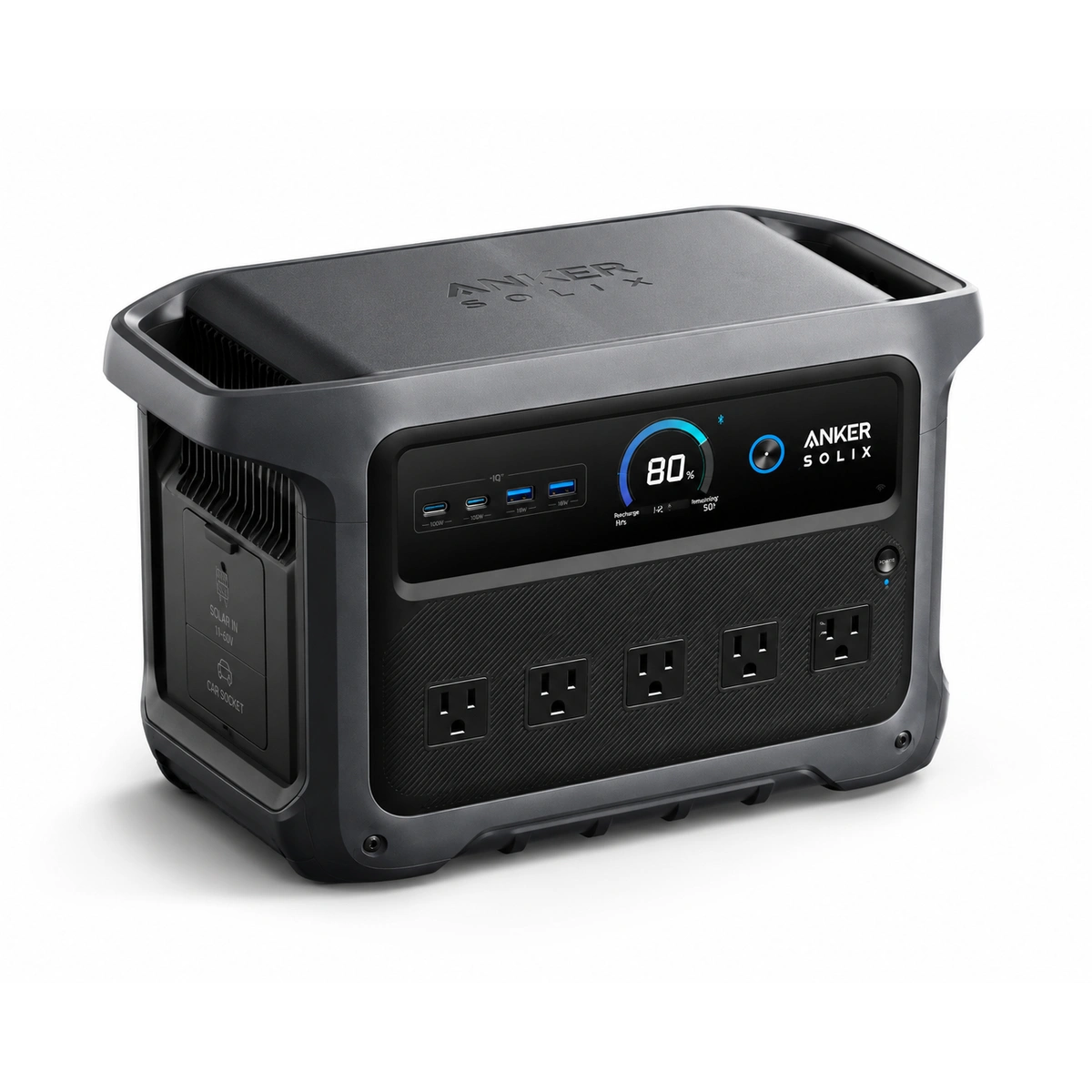
Anker SOLIX C1000 Gen 2
Matches This Baseline
Baseline comparison
Battery capacity: Battery capacity meets the estimated requirement (1,024 Wh vs 445 Wh needed)
Continuous AC output: Continuous AC output meets the estimated requirement (2,000 W vs 360 W needed)
Related Hubs
Verdict
Against the compact example used for context, the Anker SOLIX C1000 Gen 2 listed specifications exceed both storage and inverter planning estimates. Campers with modest loads may find that useful as a specification reference, but trip length, recharge method, and appliance peaks still determine real-world fit.
These guides use baseline planning assumptions and published product specifications. They are not professional electrical designs. Verify sizing, compatibility, and installation requirements for your specific loads and location before purchasing equipment.