Renogy 1000W vs 2000W Inverter
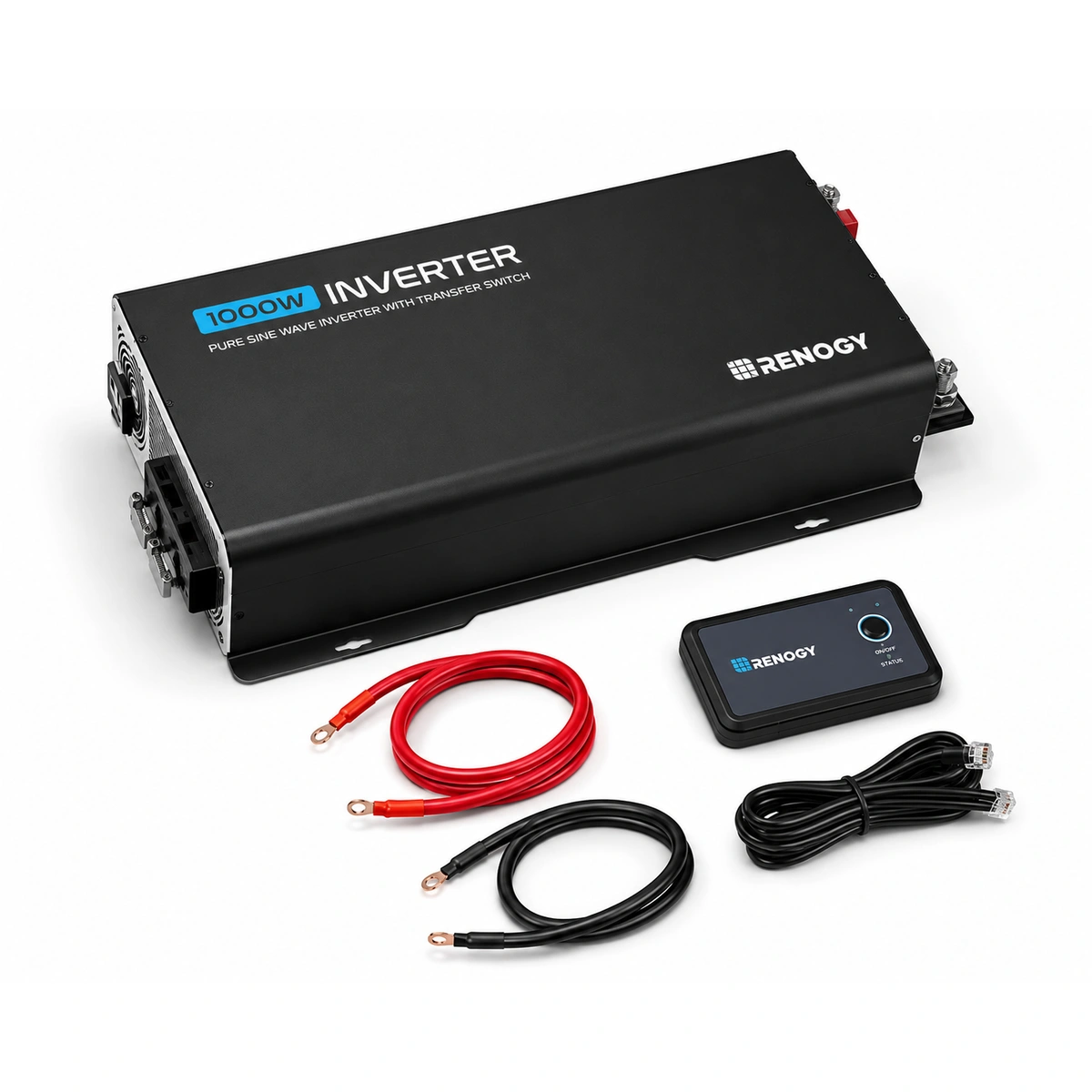
Inverter selection should start with continuous AC output, not surge ratings alone. Both Renogy PUH pure sine inverters in this comparison share the same published feature notes—UPS transfer switch and Bluetooth remote monitoring—while differing in listed continuous output wattage.
This page compares catalog specifications only. Wire sizing, breaker coordination, and battery current draw at your expected loads still require separate planning.
Quick Winner
- Best OverallRenogy Inverter PUH 2000W Pure Sine Wave Power Inverter
2,000 W continuous output covers microwaves and multi-appliance loads.
- Best ValueRenogy Inverter PUH 1000W Pure Sine Wave Power Inverter
Sufficient for documented small loads at half the continuous wattage tier.
- Best RVRenogy Inverter PUH 2000W Pure Sine Wave Power Inverter
Headroom for common RV AC appliances without nuisance trips.
Products Compared
Affiliate disclosure: Equipment links below are affiliate links. SunPowerLogic may earn a commission from qualifying purchases at no additional cost to you. Each product keeps its own retailer link—there is no single comparison winner button.
Specification Comparison
Only fields relevant to both product types are shown. An em dash means not applicable; "Not listed" means the field applies but no value was published in the catalog.
| Specification | Renogy Inverter PUH 1000W Pure Sine Wave Power Inverter | Renogy Inverter PUH 2000W Pure Sine Wave Power Inverter |
|---|---|---|
| Brand | Renogy | Renogy |
| Product type | Inverter | Inverter |
| Continuous AC output | 1,000 W | 2,000 W |
| Additional specification note | 2000W surge; UPS transfer switch; Bluetooth remote monitoring | 4000W surge; UPS transfer switch; Bluetooth remote monitoring |
| Merchant | Amazon | Amazon |
Summary
Power planning for inverters centers on continuous watts: the 1,000 W model lists half the continuous output of the 2,000 W model. Size to your running load inventory first, then confirm whether brief surge events stay within published surge notes.
Both listings record surge capability in the additional specification note—2,000 W surge on the 1,000 W inverter and 4,000 W surge on the 2,000 W inverter. Surge figures describe short-duration capability and should not be treated as continuous output.
Expected use differs by load profile. Smaller continuous loads—laptops, fans, modest kitchen appliances—may fit within 1,000 W continuous output. Heavier simultaneous loads—microwaves plus other AC devices—often push planning toward the 2,000 W continuous tier.
Trade-offs include cost, idle draw, and battery stress: a larger inverter can support bigger loads but may encourage running equipment that increases nightly energy use. A smaller inverter can be appropriate when loads are disciplined and peak demand is documented.
Upgrade considerations: if your load list grows after installation, moving from 1,000 W to 2,000 W continuous output may avoid nuisance trips—but only when battery capacity and DC cabling can support the higher sustained draw.
SunPowerLogic does not declare an overall winner. Use the specification table and fit guidance below to match products to your planning requirements.
Editorial Notes
Verdicts, pros, and cons below come from product-editorial.csv only. SunPowerLogic does not declare an overall winner in editorial content.
Renogy Inverter PUH 1000W Pure Sine Wave Power Inverter
Editor’s Verdict
Renogy 1000W pure sine inverter lists 1,000 W continuous AC output with 2,000 W surge noted separately. It scores 7/10 for lower-load RV builds where peak simultaneous AC demand stays modest, though it falls 500 W short of the Sprinter Van 1,500 W continuous estimate.
Pros
- 1,000 W continuous output suits light AC load lists
- 2,000 W surge rating for startup loads (not continuous)
- UPS transfer switch and Bluetooth monitoring listed
Cons
- 500 W below the Sprinter Van 1,500 W continuous estimate
- Surge rating is not continuous output capacity
- Requires separate battery bank and DC wiring
Best For
- Weekend RV camping with modest AC appliances
- Builds where peak simultaneous load stays under 1,000 W
- Budget inverter upgrades on existing 12V banks
Avoid If
- Sprinter-scale builds with ~1,500 W continuous need
- Running microwave plus other AC loads simultaneously
- Buyers needing inverter headroom for future load growth
Renogy Inverter PUH 2000W Pure Sine Wave Power Inverter
Editor’s Verdict
Renogy 2000W pure sine inverter lists 2,000 W continuous AC output with 4,000 W surge noted separately. It scores 8/10 for RV and van builds that need headroom above the Sprinter Van 1,500 W continuous estimate while pairing with a correctly sized battery bank.
Pros
- 2,000 W continuous output exceeds the 1,500 W Sprinter example
- 4,000 W surge for startup loads (plan from continuous rating)
- UPS transfer switch and Bluetooth monitoring listed
Cons
- Requires correctly sized battery bank and DC wiring
- Surge capacity is not continuous output
- Standalone inverter—no integrated storage
Best For
- Sprinter van and RV builds with moderate-to-heavy AC loads
- Upgrades from 1,000 W when load list has grown
- Renogy ecosystem builds matching battery and inverter tiers
Avoid If
- Loads requiring sustained output above 2,000 W continuous
- Buyers wanting an integrated portable power station
- Systems without a battery bank sized for inverter demand
Renogy Inverter PUH 1000W Pure Sine Wave Power Inverter may be a better fit if…
- Your documented continuous AC loads stay below 1,000 W—a smaller inverter may be sufficient when peak running demand does not require 2,000 W continuous output.
- Published surge or feature notes (2000W surge; UPS transfer switch; Bluetooth remote monitoring) align with startup loads or transfer-switch requirements in your build.
Renogy Inverter PUH 2000W Pure Sine Wave Power Inverter may be a better fit if…
- Your continuous AC load inventory exceeds 1,000 W but remains within 2,000 W based on your planning worksheet.
- Published surge or feature notes (4000W surge; UPS transfer switch; Bluetooth remote monitoring) align with startup loads or transfer-switch requirements in your build.
Key Differences
Specification rows where published catalog values differ between the two products.
| Specification | Renogy Inverter PUH 1000W Pure Sine Wave Power Inverter | Renogy Inverter PUH 2000W Pure Sine Wave Power Inverter |
|---|---|---|
| Continuous AC output | 1,000 W | 2,000 W |
| Additional specification note | 2000W surge; UPS transfer switch; Bluetooth remote monitoring | 4000W surge; UPS transfer switch; Bluetooth remote monitoring |
Related Products
Other active inverter products in the catalog, excluding both compared options.
Related Hubs
Frequently Asked Questions
What is being compared in Renogy 1000W vs 2000W Inverter?
This comparison evaluates Renogy Inverter PUH 1000W Pure Sine Wave Power Inverter and Renogy Inverter PUH 2000W Pure Sine Wave Power Inverter using published catalog specifications only. Key differences in the catalog include continuous ac output (1,000 W vs 2,000 W), additional specification note (2000W surge; UPS transfer switch; Bluetooth remote monitoring vs 4000W surge; UPS transfer switch; Bluetooth remote monitoring). It does not declare an overall winner.
Can I use either inverter for RV or van builds?
RV and van suitability depends on whether listed voltage, capacity, or output figures match your architecture and daily energy budget—not the equipment category alone. Key differences in the catalog include continuous ac output (1,000 W vs 2,000 W), additional specification note (2000W surge; UPS transfer switch; Bluetooth remote monitoring vs 4000W surge; UPS transfer switch; Bluetooth remote monitoring). Confirm enclosure size, charging equipment, and inverter sizing separately.
How should I read "Not listed" or "—" in the specification table?
An em dash (—) means the specification dimension is not applicable to that product type in the catalog. "Not listed" means the field applies but no value was published in products.csv. SunPowerLogic does not invent missing specifications.
Do these inverter products include pricing or availability data?
No. SunPowerLogic compares published technical specifications and links to merchant listings when affiliate URLs are present. Current price, stock status, and warranty terms must be confirmed on the retailer site.
Should I size to continuous output or surge ratings for inverters?
Plan around continuous AC output first. Surge figures in the additional specification note describe short-duration capability and should not be treated as continuous output for load budgeting.
What should I verify before purchasing either option?
Confirm merchant listing details, connector types, warranty coverage, and installation constraints that are not captured in the catalog. Key differences in the catalog include continuous ac output (1,000 W vs 2,000 W), additional specification note (2000W surge; UPS transfer switch; Bluetooth remote monitoring vs 4000W surge; UPS transfer switch; Bluetooth remote monitoring). Affiliate links, when present, lead to external retailers where final purchase decisions should be made.
These comparisons use published catalog specifications and educational planning context. They are not professional electrical designs and do not declare an overall winner. Verify sizing, compatibility, and installation requirements for your specific loads and location before purchasing equipment.