1000W vs 2000W Inverter for an RV or Camper Van
Planning context for: 1000w vs 2000w inverter for rv
Inverter sizing for RV and camper van builds usually centers on continuous AC output, not short surge ratings alone. This comparison looks at the listed continuous AC output of two Renogy pure sine wave inverters, while treating their surge ratings separately.
The Sprinter Van example provides context for how a 1,500 W inverter need is estimated from peak load and surge margin assumptions.
Analysis
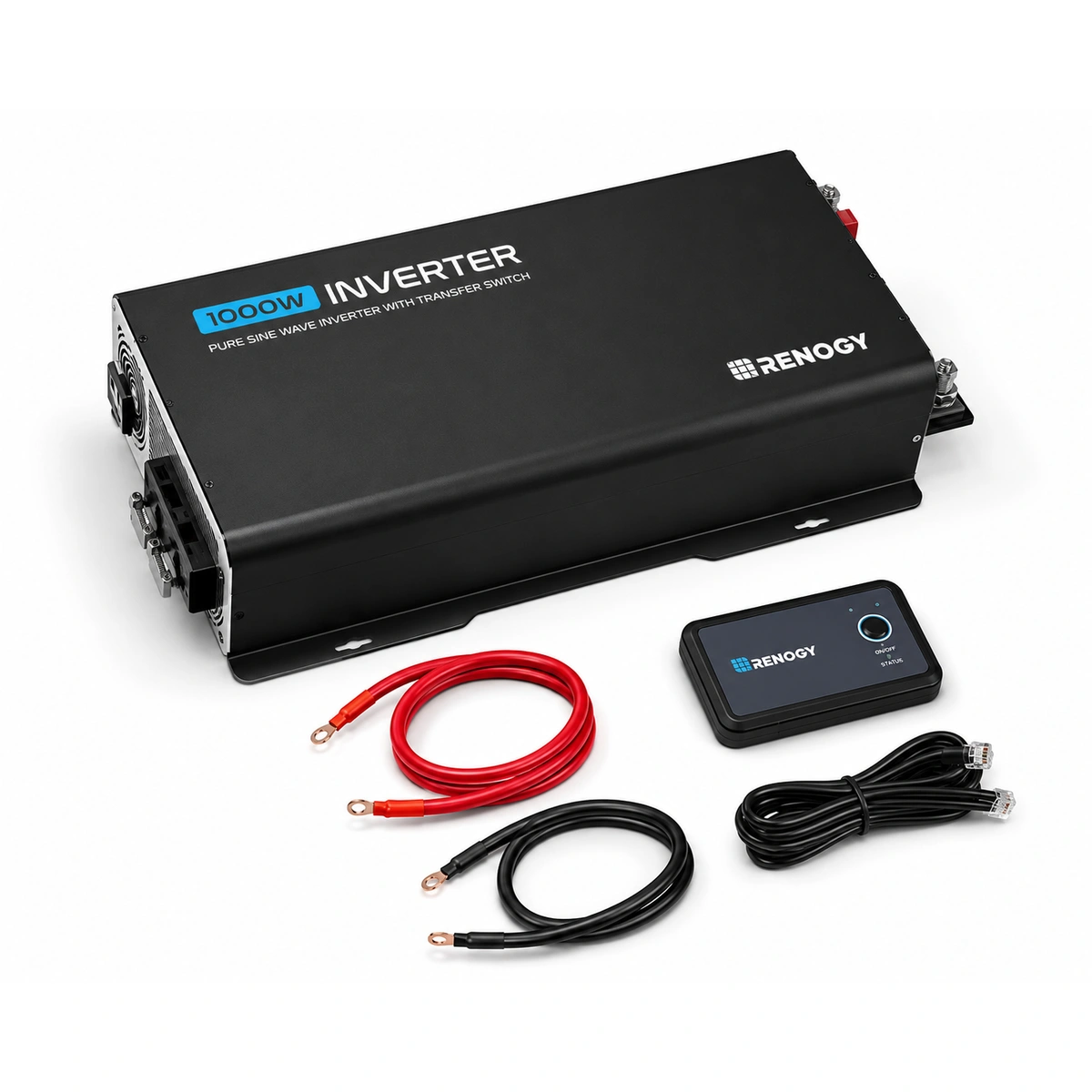
The Renogy Inverter PUH 1000W lists 1,000 W continuous AC output. Its additional specification note records 2,000 W surge capability along with UPS transfer switch and Bluetooth remote monitoring features. Surge capacity is not treated as continuous output in this comparison.
The Renogy Inverter PUH 2000W lists 2,000 W continuous AC output with a surge note of 4,000 W. Against the Sprinter Van inverter estimate of about 1,500 W, the 1,000 W unit falls 500 W short on continuous output while the 2,000 W unit provides about 500 W of headroom.
Standalone inverters do not include battery storage. A 2,000 W inverter still requires a correctly sized battery bank and DC wiring that can support the load. A 1,000 W inverter may be adequate when peak appliance demand stays lower, but margin shrinks quickly when inductive loads start up.
Product Comparison
| Specification | Renogy Inverter PUH 1000W Pure Sine Wave Power Inverter | Renogy Inverter PUH 2000W Pure Sine Wave Power Inverter |
|---|---|---|
| Brand | Renogy | Renogy |
| Product type | Inverter | Inverter |
| Continuous AC output | 1,000 W | 2,000 W |
| Additional specification note | 2000W surge; UPS transfer switch; Bluetooth remote monitoring | 4000W surge; UPS transfer switch; Bluetooth remote monitoring |
| Merchant | Amazon | Amazon |
Referenced Products
Affiliate disclosure: Some equipment links below are affiliate links. SunPowerLogic may earn a commission from qualifying purchases at no additional cost to you.
Related Hubs
Verdict
Choose inverter continuous output based on the highest realistic simultaneous AC load plus planning margin. The 2,000 W Renogy unit fits buyers who want headroom above the 1,500 W example estimate, while the 1,000 W unit suits lower-load builds where peak demand stays modest. Match the inverter to your load list and battery system rather than surge marketing language alone.
These guides use baseline planning assumptions and published product specifications. They are not professional electrical designs. Verify sizing, compatibility, and installation requirements for your specific loads and location before purchasing equipment.