200Ah vs 300Ah Lithium Battery for an RV: How Much Capacity Do You Need?
Planning context for: 200ah vs 300ah lithium battery for rv
RV battery shoppers often compare 200 Ah and 300 Ah lithium packs without stopping to ask whether the comparison uses the same nominal voltage. Amp-hour capacity only makes sense when the nominal voltage is the same.
This guide explains the planning difference between those two common amp-hour tiers and uses the Sprinter Van example to show how a watt-hour storage estimate converts to amp-hours at 12 V nominal. No specific 200 Ah product is compared because this is a capacity planning guide, not a product-versus-product matchup.
Analysis
At the same nominal voltage, 300 Ah provides 50% more amp-hour capacity than 200 Ah. That is a straight mathematical relationship. It does not by itself prove that either size is right for your RV without first estimating daily energy use in watt-hours and then translating that requirement to amp-hours at your system's nominal voltage.
A 200 Ah bank may make more sense when daily energy demand is lower, charging is frequent, solar or alternator charging replenishes energy regularly, and the lower battery capacity still covers the actual energy budget.
A 300 Ah bank may provide more headroom when daily energy consumption is higher, longer battery-only periods are expected, charging opportunities are less frequent, or the electrical system supports heavier daily energy use.
The Renogy 12V 300Ah Mini Size LiFePO4 Lithium Battery is included here as a verified 300 Ah example currently tracked on the site. Its listed specifications include 12 V nominal voltage, 300 Ah battery capacity, LiFePO4 chemistry, and a 200 A BMS rating. It does not automatically meet every RV electrical layout.
Referenced Products
Affiliate disclosure: Some equipment links below are affiliate links. SunPowerLogic may earn a commission from qualifying purchases at no additional cost to you.
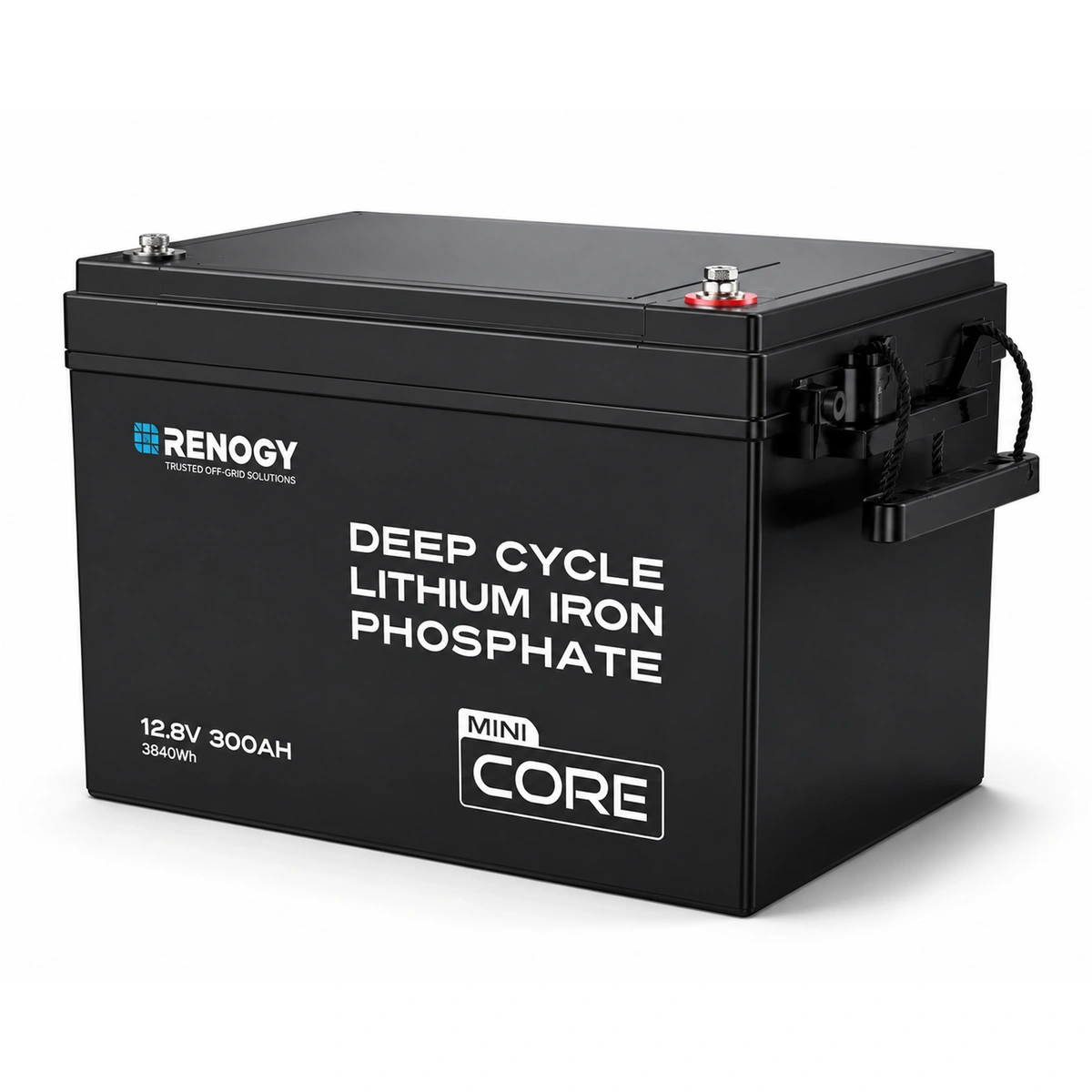
Renogy 12V 300Ah Mini Size LiFePO4 Lithium Battery
Above Ah Planning Estimate
Baseline comparison
Capacity planning comparison
Listed capacity: 300 Ah at 12 V
Planning estimate: approximately 186 Ah at 12 V
Capacity headroom: approximately 114 Ah above this guide's planning estimate
Amp-hour comparisons are only directly useful here because the listed battery voltage and the guide planning voltage are both 12 V.
Related Hubs
Verdict
Choose battery capacity from a watt-hour energy budget first, then translate the requirement to amp-hours at the system's nominal voltage. At equal voltage, 300 Ah provides more capacity headroom than 200 Ah, but more capacity is not automatically necessary for every RV.
These guides use baseline planning assumptions and published product specifications. They are not professional electrical designs. Verify sizing, compatibility, and installation requirements for your specific loads and location before purchasing equipment.