How Much Solar Power Does a Sprinter Van Need?
Planning context for: how much solar power does a sprinter van need
Solar sizing for camper vans starts with an honest daily energy estimate. This guide uses a Sprinter Van example that assumes 2,000 Wh/day before estimating array size from sun hours and efficiency losses.
This is a planning model. Real vans vary widely depending on refrigeration, heating, work equipment, and charging habits.
Analysis
The estimate divides daily energy by the product of peak sun hours and system efficiency. For the Sprinter Van example, that means 2,000 Wh divided by 5 peak sun hours and an 80% system efficiency assumption, producing an estimated solar need of about 500 W.
Peak sun hours represent usable charging time, not total daylight. System efficiency accounts for wiring, controller, and conversion losses between the panel and usable stored energy.
As a reference point, the Renogy 400W Monocrystalline Premium Kit lists 400 W of rated solar output—100 W below the 500 W estimate for this example. That does not mean the kit cannot work in every van, but it does mean a buyer may need supplemental charging, lower daily use, or additional panels to match the example target.
Referenced Products
Affiliate disclosure: Some equipment links below are affiliate links. SunPowerLogic may earn a commission from qualifying purchases at no additional cost to you.
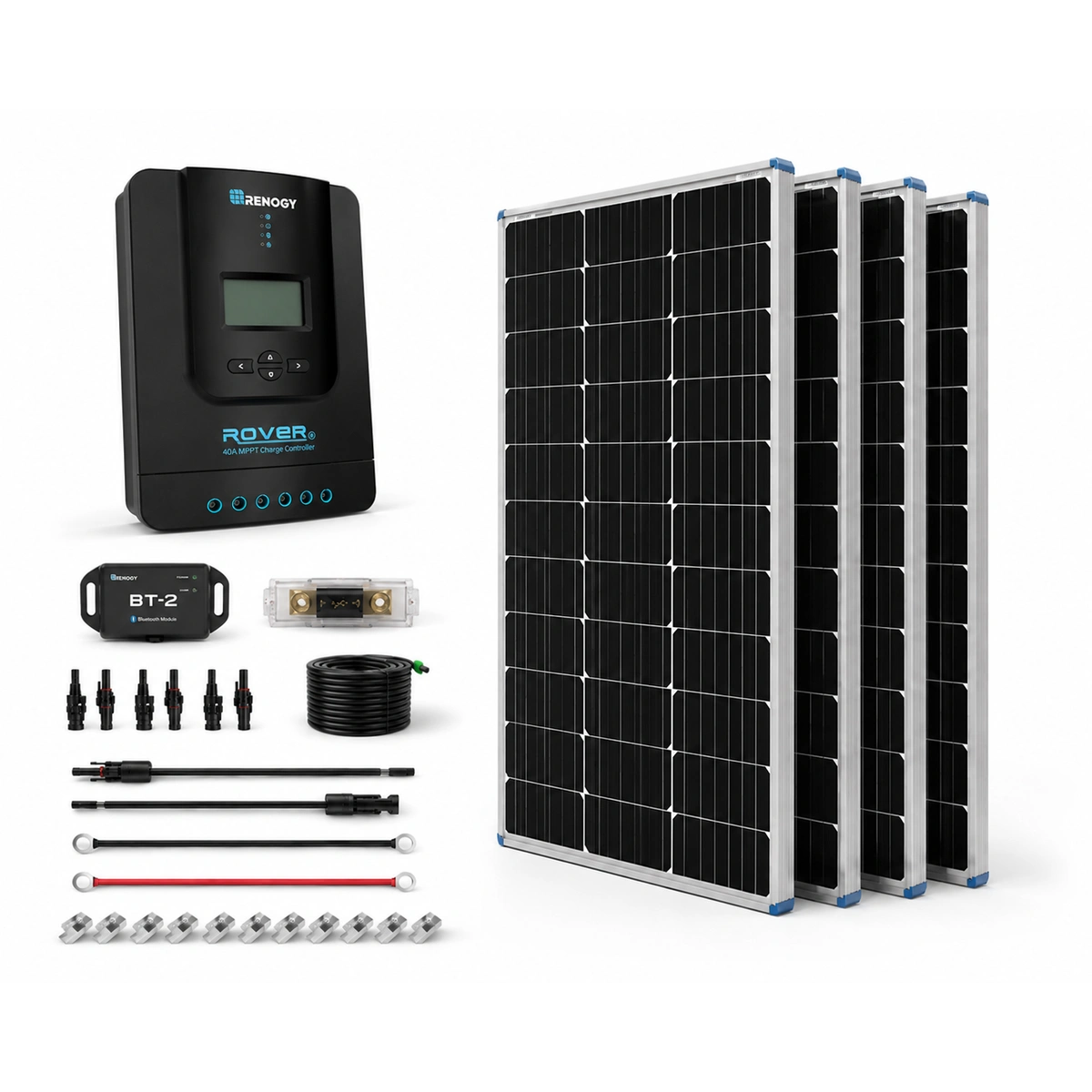
Renogy 400W Monocrystalline Premium Kit
Below This Baseline
Baseline comparison
Solar charging output: Solar charging output is below the estimated requirement by 100 W (400 W listed vs 500 W needed)
Related Hubs
Verdict
For the Sprinter Van example, the estimated solar array need is about 500 W. If your real daily use is lower, your requirement drops proportionally. If your use is higher or your effective sun hours are lower, the array requirement rises. Treat the 500 W figure as a planning estimate and compare available panel or kit ratings against your own assumptions.
These guides use baseline planning assumptions and published product specifications. They are not professional electrical designs. Verify sizing, compatibility, and installation requirements for your specific loads and location before purchasing equipment.