EcoFlow DELTA 3 Ultra Plus for Van Life: Capacity and Output Compared
Planning context for: ecoflow delta 3 ultra plus van life
The EcoFlow DELTA 3 Ultra Plus is a portable power station with listed battery capacity and AC output. Van life shoppers often want to know how those ratings relate to a realistic daily energy target.
This guide uses the Sprinter Van example as a planning reference. It does not claim the product was evaluated in a specific vehicle installation.
Analysis
Manufacturer data lists the EcoFlow DELTA 3 Ultra Plus at 3,072 Wh battery capacity and 3,600 W continuous AC output. The Sprinter Van example estimates about 2,223 Wh of storage need and about 1,500 W of inverter need from its assumptions.
Against those estimates, listed capacity exceeds the storage need by about 849 Wh and continuous output exceeds the inverter need by about 2,100 W. No rated solar output is listed for this product, so no solar array comparison is shown.
Van life power planning still requires thinking about how the unit will be recharged, whether loads are DC or AC, and whether peak startup loads exceed continuous ratings for short periods. The power station combines storage and inversion in one unit, which is different from a separate battery bank plus standalone inverter architecture.
Referenced Products
Affiliate disclosure: Some equipment links below are affiliate links. SunPowerLogic may earn a commission from qualifying purchases at no additional cost to you.
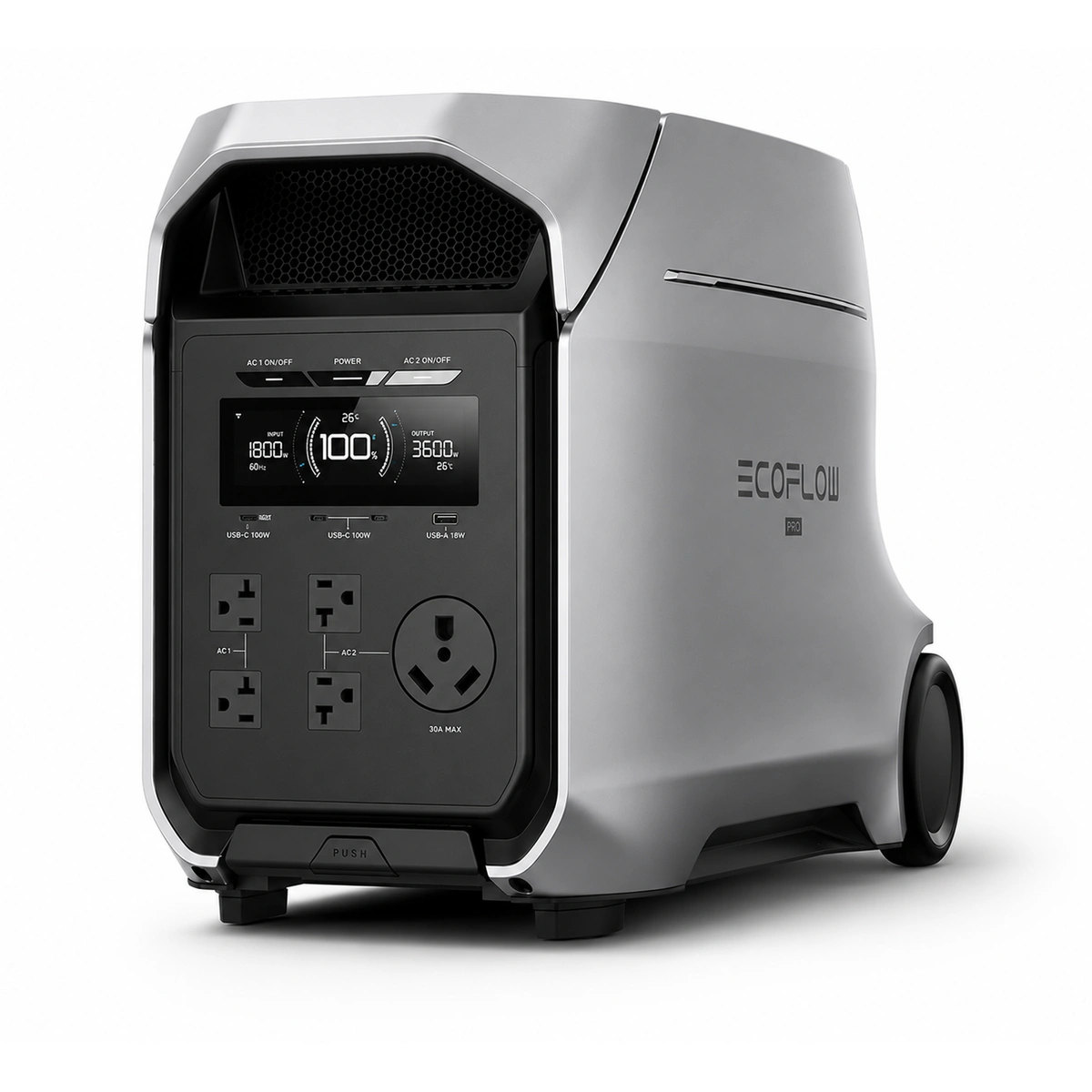
EcoFlow DELTA 3 Ultra Plus
Matches This Baseline
Baseline comparison
Battery capacity: Battery capacity meets the estimated requirement (3,072 Wh vs 2,223 Wh needed)
Continuous AC output: Continuous AC output meets the estimated requirement (3,600 W vs 1,500 W needed)
Related Hubs
Verdict
For the Sprinter Van example at 2,000 Wh/day, the EcoFlow DELTA 3 Ultra Plus listed specifications exceed both the estimated storage and inverter needs. That makes it a useful comparison point for van life shoppers working from the same example, but your actual daily Wh use may be higher or lower than 2,000 Wh/day.
These guides use baseline planning assumptions and published product specifications. They are not professional electrical designs. Verify sizing, compatibility, and installation requirements for your specific loads and location before purchasing equipment.