Tutorial

How Much Solar Power Does a Sprinter Van Need?

Learn how to estimate Sprinter Van solar array size from a 2,000 Wh/day example, peak sun hours, and system efficiency assumptions.

  • 6 min read
  • By SunPowerLogic Editorial
  • Batteries
  • Last reviewed July 28, 2026

Quick Verdict

Sprinter Van example: about 500 W solar for 2,000 Wh/day at 5 peak sun hours.

Divide daily energy by peak sun hours and system efficiency. For the Sprinter Van planning example, that yields roughly 500 W β€” scale up or down if your daily use or sun hours differ.

Key Takeaways

  • Start from an honest daily watt-hour estimate before sizing panels.
  • Peak sun hours measure usable charging time, not total daylight.
  • System efficiency accounts for wiring, controller, and conversion losses.

Buying Verdict

Ranked picks with Amazon pricing β€” compare specifications on our product pages before you buy.

Affiliate disclosure: Product links below are Amazon affiliate links. SunPowerLogic may earn a commission from qualifying purchases at no additional cost to you.

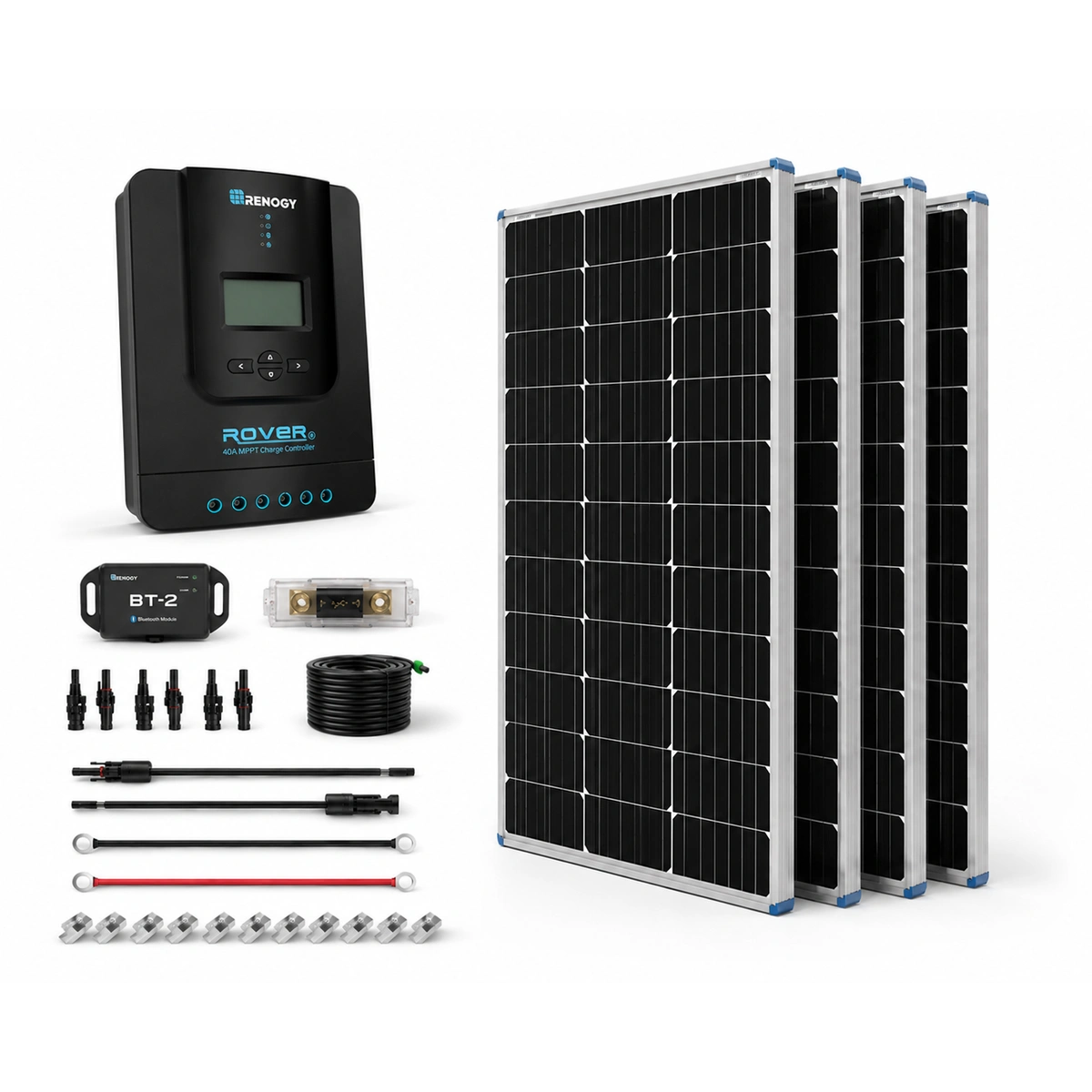
Product image for Renogy 400W Monocrystalline Premium Kit
πŸ† Best Overall
7/10Editor Score

Renogy 400W Monocrystalline Premium Kit

Renogy 400W monocrystalline premium kit lists 400W nameplate solar output as a pre-configured array within Renogy DIY component line. It scores 7/10 for buyers assembling a modest 12V charging source, with the understanding that daily yield depends on location mounting and charge controller pairing not included in this catalog entry.

Best for

  • RV and van roof arrays where 400W fits available mounting area
  • Off-grid cabin supplemental charging with a compatible charge controller
  • DIY builds already planning Renogy batteries and controllers

Key pros

  • 400W rated solar output for faster recharge versus lower-wattage panels
  • Pre-configured kit format within Renogy component ecosystem
  • Monocrystalline panel technology listed in product name

Key cons

  • Charge controller compatibility and wiring not detailed in catalog
  • Nameplate wattage reflects STC conditionsβ€”not guaranteed daily yield

Who This Guide Is For

Primary audience

Sprinter van builders

Owners estimating roof or portable solar from a daily energy budget and local sun hours.

Camper solar planners

Readers translating watt-hour consumption into array wattage using planning assumptions.

How We Chose

Our editorial recommendations are based on published specifications, documented use cases, and hands-on research criteria β€” not paid placement.

  • Published specifications

    Recommendations reference manufacturer specs and catalog data β€” not marketing claims alone.

  • Documented use cases

    We match picks to stated audiences, load profiles, and installation contexts described in the article.

  • Editorial independence

    Affiliate partnerships do not determine which products are featured or how they are ranked.

Before You Buy

  • Start from an honest daily watt-hour estimate before sizing panels.
  • Peak sun hours measure usable charging time, not total daylight.
  • System efficiency accounts for wiring, controller, and conversion losses.

Introduction

Solar sizing for camper vans starts with an honest daily energy estimate. This guide uses a Sprinter Van example that assumes 2,000 Wh/day before estimating array size from sun hours and efficiency losses.

This is a planning model. Real vans vary widely depending on refrigeration, heating, work equipment, and charging habits.

Baseline Sizing Summary

The Sprinter Van example uses an estimated daily energy need of 2,000 Wh/day. These values are planning estimates, not a site-specific electrical design.

Daily energy assumption
2,000 Wh/day
Estimated solar need
500 W
Estimated battery need
2,223 Wh
Estimated inverter need
1,500 W

Peak sun hours: 5 | System efficiency: 80% | Usable battery fraction: 90% | Surge margin: 1.25Γ—

View full Sprinter Van setup example β†’

Analysis

The estimate divides daily energy by the product of peak sun hours and system efficiency. For the Sprinter Van example, that means 2,000 Wh divided by 5 peak sun hours and an 80% system efficiency assumption, producing an estimated solar need of about 500 W.

Peak sun hours represent usable charging time, not total daylight. System efficiency accounts for wiring, controller, and conversion losses between the panel and usable stored energy.

As a reference point, the Renogy 400W Monocrystalline Premium Kit lists 400 W of rated solar outputβ€”100 W below the 500 W estimate for this example. That does not mean the kit cannot work in every van, but it does mean a buyer may need supplemental charging, lower daily use, or additional panels to match the example target.

Verdict

For the Sprinter Van example, the estimated solar array need is about 500 W. If your real daily use is lower, your requirement drops proportionally. If your use is higher or your effective sun hours are lower, the array requirement rises. Treat the 500 W figure as a planning estimate and compare available panel or kit ratings against your own assumptions.

How the Sprinter Van solar estimate works

Solar array sizing starts with daily energy in watt-hours, then divides by the product of peak sun hours and system efficiency. For the Sprinter Van example, 2,000 Wh/day divided by 5 peak sun hours and an 80% system efficiency assumption produces about 500 W of array need.

That formula matches the Solar Array Size Calculator on SunPowerLogic. Enter your own daily energy, sun hours, and efficiency to see how the estimate changes for your build.

The full Sprinter Van setup example shows battery, inverter, and solar planning assumptions used across related guides β€” useful context when you compare panel or kit ratings.

Model your own array size

Use the Solar Array Size Calculator to translate daily energy, peak sun hours, and system efficiency into a wattage target before comparing catalog kits.

Ready to buy?

Compare the latest Amazon price and customer reviews before you order.

Our top pick for this guide: Renogy 400W Monocrystalline Premium Kit

Check Price on Amazon →View full specifications on SunPowerLogic →

Affiliate disclosure: This is an Amazon affiliate link. SunPowerLogic may earn a commission from qualifying purchases at no additional cost to you.

Frequently Asked Questions

  • How much solar does a Sprinter van need?

    It depends on daily watt-hour use and charging conditions. The Sprinter Van example assumes 2,000 Wh/day with 5 peak sun hours and 80% system efficiency, producing an estimated array need of about 500 W. Your real requirement rises with higher daily use or lower effective sun hours.

  • What are peak sun hours in solar sizing?

    Peak sun hours represent usable solar charging time per day β€” not total daylight. The Sprinter Van example uses 5 peak sun hours. Locations with fewer effective sun hours need a larger array to replace the same daily energy.

  • Why does system efficiency matter for array sizing?

    Not all panel wattage reaches stored energy. Wiring, charge controller, and conversion losses reduce usable output. The Sprinter Van example applies an 80% system efficiency factor in the denominator of the sizing formula.